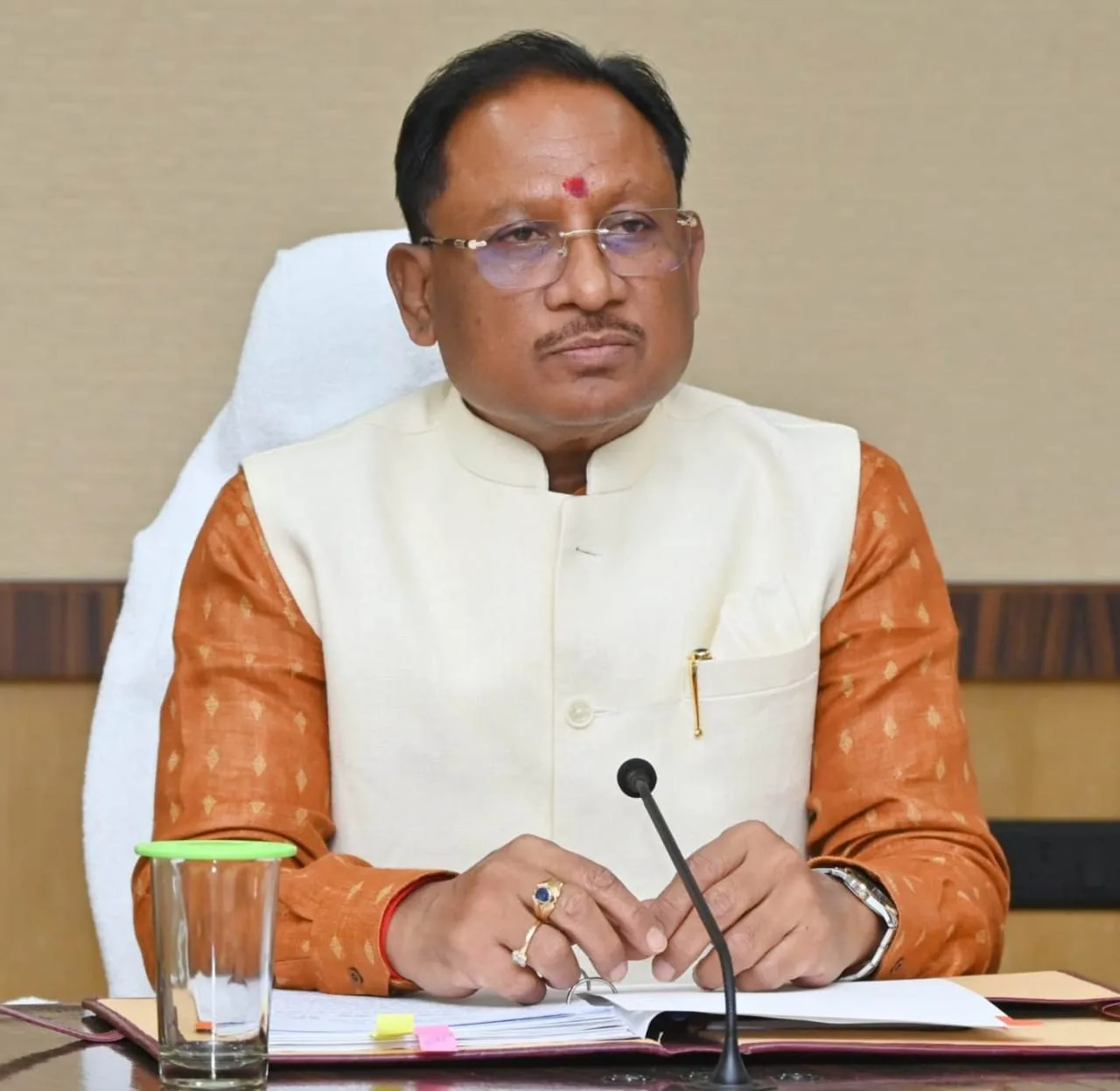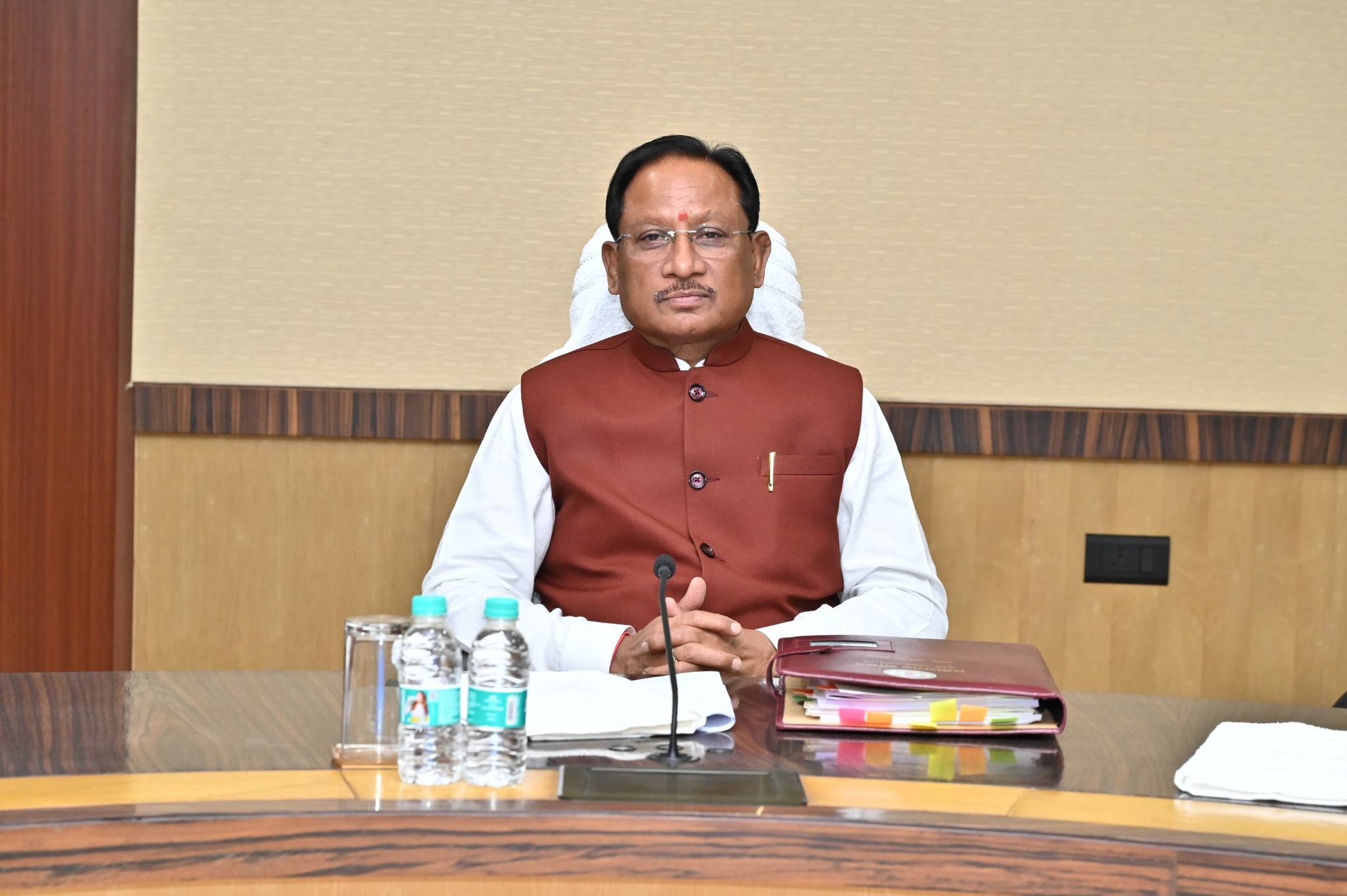
Raipur, July 14, 2026: Chhattisgarh Chief Minister Vishnu Dev Sai today expressed gratitude in the State Assembly for the Central Government’s historic support in liberating the region from Naxalism, while noting that Chhattisgarh had faced a grave challenge in the form of Naxal violence for decades.
The Chief Minister stated that, thanks to the coordinated efforts of the Central and State governments, the indomitable courage of security forces, and the trust and cooperation of the people of Bastar, the state has decisively overcome this challenge and entered a new era of peace, security, and development.
Sai remarked that this success is the result of years of sustained effort, well-planned strategy, the valour of security forces, and the cooperation of ordinary citizens.
Paying humble tribute to the martyred soldiers who made the ultimate sacrifice in the struggle against Naxalism, the Chief Minister said their sacrifice and dedication would continue to inspire the nation. He commended the courage, dedication, and professional competence of the Central Armed Police Forces, Chhattisgarh Police, District Police Force, special security units, and all security agencies involved in the operations.
Sai stated that under the leadership of Prime Minister Narendra Modi, the Central Government adopted a strategy for Naxal-affected areas based on coordinated security and development.
Simultaneously, under the guidance of Union Home Minister Amit Shah, continuous reviews of security operations, the availability of resources, and improved coordination between the Centre and the State were ensured, giving the campaign the necessary momentum.
He mentioned that following a high-level meeting of Directors General of Police from Naxal-affected states held in Raipur on August 24, 2024, a time-bound action plan was prepared for the complete eradication of Naxalism. In line with this, development works were expanded in parallel with accelerating security operations.
The Chief Minister added that the State government also regularly reviewed the campaign. He personally visited the Bastar region frequently to boost the morale of the security forces and engaged with local citizens in various villages.
Sai stated that alongside security operations, the state government placed special emphasis on bringing individuals into the mainstream who wished to abandon the path of violence and lead a normal life. To this end, a comprehensive and humane policy was implemented for the rehabilitation of Naxalites who surrendered.
He noted that under the rehabilitation policy, those who surrendered were provided with financial assistance, land, skill development training, self-employment opportunities, and the means to lead a dignified life. As a result, a large number of people decided to renounce violence and rejoin the mainstream of society.
The Chief Minister remarked that this policy is not limited merely to rehabilitation but also represents a significant step towards establishing lasting peace in society.
Addressing the Legislative Assembly, the Chief Minister stated that the campaign to free the region from Naxalism was not confined to security measures alone; equal priority was accorded to development. The state government ensured that as security arrangements were strengthened, government schemes and basic amenities rapidly reached these areas, bringing about lasting and positive changes in people’s lives.
Sai said that following the liberation from Naxalism, the state government is now fully focused on the holistic, inclusive, and long-term development of Bastar. To achieve this, the ‘Bastar Roadmap 2.0’ has been formulated, paving the way for systematic efforts to transform Bastar into a leading tribal division in the country.
He informed that under the ‘Niyad Nella Nar 2.0’ and ‘Bastar Munne Abhiyan’ initiatives, 31 schemes and 14 community facilities are being implemented in ‘saturation mode.’ This will directly benefit over 39 lakh people across 5,542 villages and ensure that government services reach the last mile.
The Chief Minister added that security camps are now being developed into multi-dimensional service centers. These are being developed as ‘Shaheed Gundadhur Seva Dera’ centres—hubs for civic amenities, public services, and livelihood activities—to ensure that local residents can easily access essential services within their own area.
He stated that under the ‘Mukhyamantri Swasth Bastar Abhiyan’ (Chief Minister’s Healthy Bastar Campaign), health screenings have been conducted for over 34 lakh people in Bastar, and digital health profiles have been created for them. This will facilitate the provision of timely and superior healthcare services to the citizens.
Chief Minister Sai remarked that the ‘Niyad Nella Nar’ scheme has become a pivotal instrument of this transformation. Under this scheme, 43 individual and community-oriented programs across 17 departments have been effectively implemented in 525 villages located within a 10-kilometer radius of security camps. This initiative is providing villagers with integrated access to various government schemes while further strengthening their trust in the administration.
He said that a special campaign has been launched in Bastar division to ensure saturation of the public welfare schemes of the Central and State Government. As a result, ration cards of 6 lakh 79 thousand families have been made. Jan Dhan accounts of 17 lakh people have been opened in Bastar division. Aadhaar cards of 24 lakh 66 thousand people have been made. Ayushman cards have been made for 22 lakh people. Individual forest rights letters have been provided to 1 lakh 18 thousand people. Also, Kisan Credit Cards of 3 lakh 89 thousand farmers have been made.
Sai said that extensive work is also being done in the fields of housing, education and health. He informed that 1 lakh 76 thousand Prime Minister’s residences have been sanctioned in Bastar division. Apart from this, 15 thousand houses have also been approved for the families affected by Naxal violence and surrendered Naxalites.
He said that out of 458 previously closed schools in 240 Naxal-affected villages of Bastar division, operation of 421 schools has been started again and 36 new schools have been approved.
The Chief Minister said that the state government is also taking forward the expansion of basic infrastructure in Bastar at a fast pace. Work is going on on the Jagdalpur-Raoghat rail project at a cost of Rs 3,513 crore, which will give new strength to the rail connectivity system of Bastar. He said that air services have also been expanded in Jagdalpur, due to which the connectivity of the area has further improved.
He said that the construction of Raipur-Vishakhapatnam Expressway is in the final stage. This project will not only connect Bastar with major economic and industrial areas of the country but will also provide new impetus to tourism, trade and investment.
Sai said that to make the youth employment oriented, skill training centers are being run in all the development blocks of Bastar division.
He said that innovative events like Bastar Olympics and Bastar Pandum were organized with the aim of giving positive direction to the youth through sports and culture. More than 4 lakh people participated in these events, which gave new strength to social solidarity, cultural pride and public participation.
He appreciated the contribution of Home Minister Vijay Sharma, Forest Minister Kedar Kashyap and BJP State President and Jagdalpur MLA Kiran Singh Dev in the fight to eradicate Naxal.
The Chief Minister said that the objective of the state government is not only to expand the basic facilities, but also to bring permanent improvement in the standard of living of the people of Bastar. Bastar is today moving in a new direction of trust, opportunity and prosperity through an integrated strategy of security, development and public welfare.