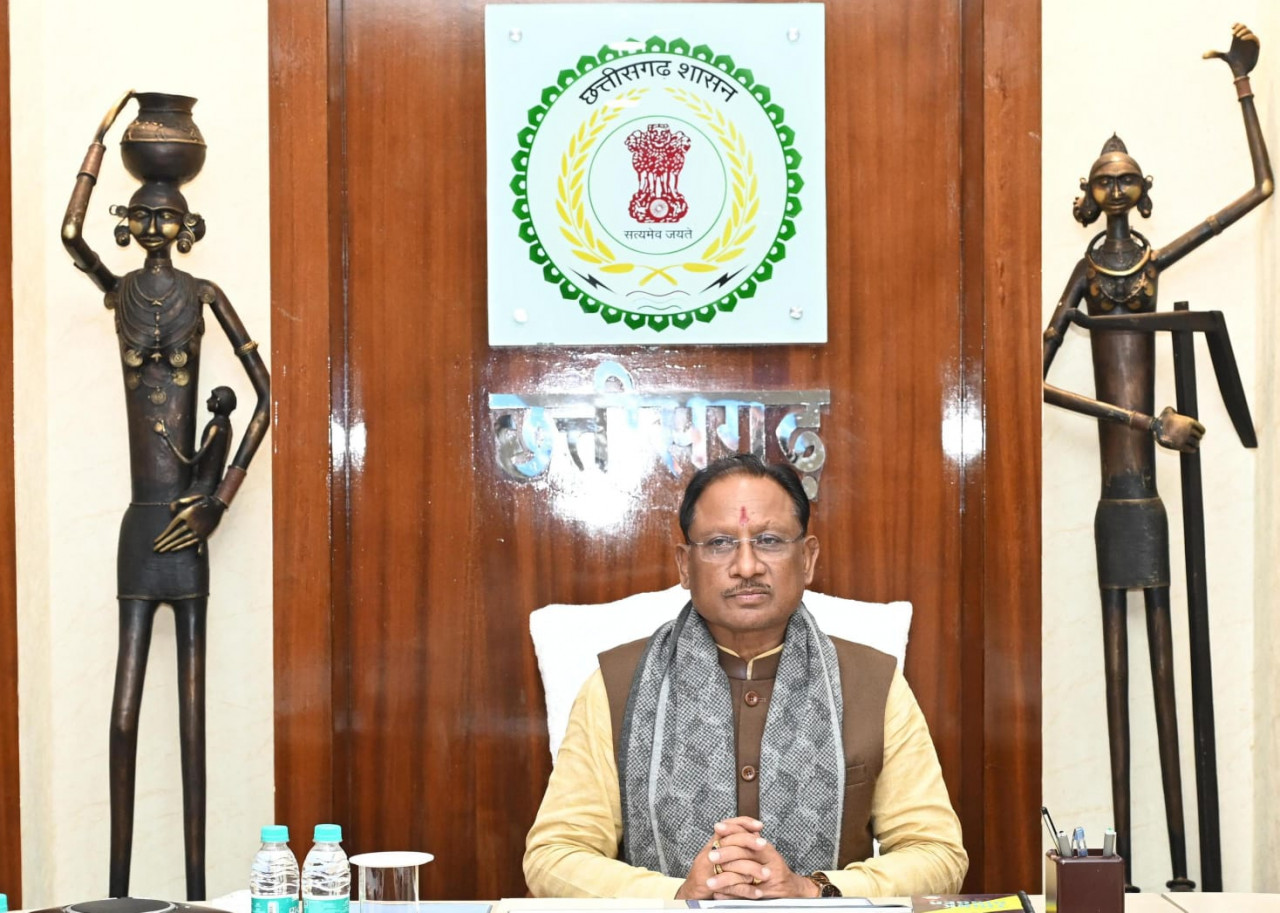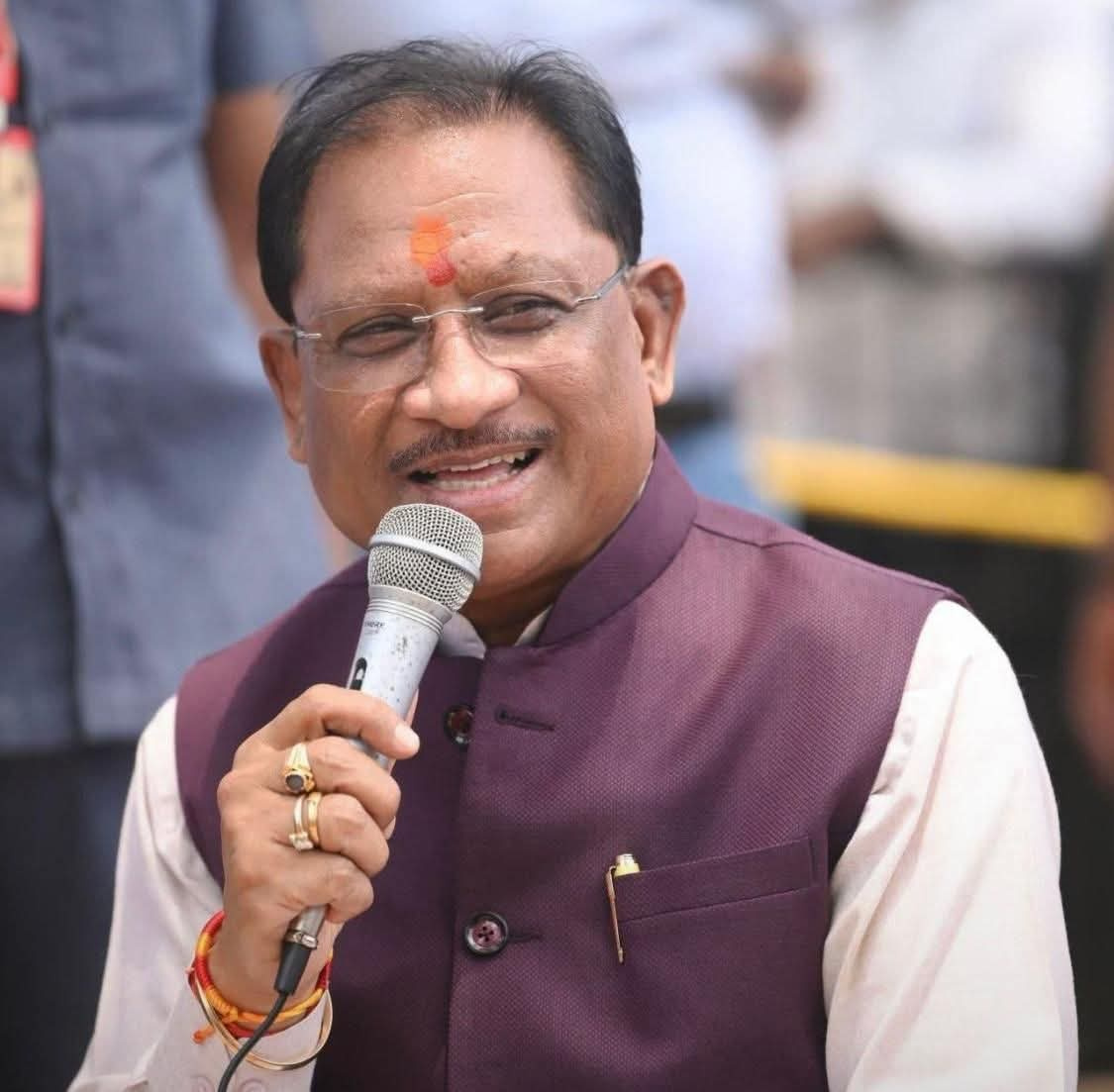
Raipur, March 30, 2026: Chhattisgarh Chief Minister Vishnu Dev Sai stated today that the fundamental duty of the police is to protect the citizens. Whenever a citizen feels unsafe, the police are the very first recourse they turn to. Therefore, maintaining the trust of the public constitutes the greatest responsibility of the police force.
While participating in the Passing Out Parade (convocation) ceremony for the Sub-Inspector cadre—held at the Netaji Subhash Chandra Bose State Police Academy in Chandkhuri, Raipur, the Chief Minister remarked that the police uniform represents not merely authority, but a solemn pledge to ensure public safety and symbolizes the inherent prestige associated with that commitment—a prestige that must be upheld under all circumstances.
Describing the police service as an immensely prestigious and duty-bound profession, the Chief Minister asserted that integrity serves as the bedrock of any distinguished service.

While inspiring the trainees, he reiterated that the primary mandate of the police is the protection of citizens; whenever a citizen perceives a threat to their safety, they instinctively turn to the police first. Consequently, preserving public trust remains the paramount responsibility of the police force.
He observed that bearing responsibility is rarely an easy task; however, with competence and unwavering dedication, it can be discharged successfully. Much like the arduous effort invested during the training phase, a career in service yields both professional satisfaction and success through sustained diligence and commitment.
Chief Minister Sai emphasized that the role of the police should not be confined solely to maintaining law and order; rather, they must actively engage with society to earn the confidence of the people.
He noted that while territory may be conquered through fear, the hearts of the people can be won only through trust.

The Chief Minister further highlighted that significant reforms have been implemented within the realm of policing in Chhattisgarh. Over the past two years, the recruitment process has been rendered more transparent and expedited; modern technology and equipment have been integrated into the police force; and specialized units have been established to combat cybercrime. Furthermore, the police training regimen has been revamped to adopt a more practical and contemporary framework.
He articulated that the police force of the future will transcend the role of a mere law-enforcement agency; instead, it will function as a proactive service provider—a transformation that necessitates its evolution from a reactive entity into a dynamic, action-oriented agency.

The Chief Minister extended his congratulations and best wishes to the officers of the Subedar, Sub-Inspector, and Platoon Commander cadres upon the successful completion of their training.
A total of 859 trainees completed their training during this session, including 54 Subedars, 528 Sub-Inspectors (GD), 02 Sub-Inspectors (Computer), 01 Sub-Inspector (Radio), 01 Sub-Inspector (Fingerprint), 68 Sub-Inspectors (SB), and 205 Platoon Commanders.
In his address, Sai stated that this day marks a memorable milestone in the lives of all the trainees—a point from which they move forward, resolved to serve the nation and Chhattisgarh Mahtari (Mother Chhattisgarh).
He remarked that this achievement, attained after rigorous training, is a matter of pride not only for the trainees themselves but also for their families and the entire state.

He noted that when he had presented appointment letters to these very youths last year, they possessed talent; today, following their training, they have imbibed discipline, self-confidence, and leadership qualities—attributes that will shape them into successful officers.
The Chief Minister further observed that today’s “Nishkraman” (departure) signifies not merely an exit from the academy, but rather an entry into the actual field of duty. Drawing a parallel with the Nishkraman Sanskar (rite of stepping out) of the Sanatan tradition, he explained that just as an infant steps out of the home for the very first time, these trainees are today stepping out of a secure training environment to enter a realm of service characterized by vast responsibilities.
The Chief Minister stated that the nation is currently undergoing a phase of historic transformation, wherein colonial-era laws are being replaced by new statutes such as the Bharatiya Nyaya Sanhita, the Bharatiya Nagarik Suraksha Sanhita, and the Bharatiya Sakshya Adhiniyam.
This passing-out parade holds special significance in this regard, as this is the first batch of Sub-Inspectors to have received training under these new codes. He expressed his confidence that these officers would effectively implement these laws, thereby strengthening the justice delivery system.
The Chief Minister affirmed that the state government is operating on three core pillars—Security, Development, and Trust—and that the role of the police is pivotal in empowering all three.
Citing the vision of Prime Minister Narendra Modi and Union Home Minister Amit Shah, he noted that concerted efforts are underway to establish a “SMART”—Sensitive, Modern, Alert, Reliable, and Techno-savvy—police system within the country.
He stated that while the police force of the future will be equipped with digital, technological, and advanced resources, the trust of the public can ultimately be earned only through one’s behaviour, conduct, and unwavering dedication.
In conclusion, the Chief Minister declared that the lives of these trainees are no longer merely personal; they have now been dedicated to the service of society and the state. He urged all officers to accord the highest priority to justice, integrity, and humanity while discharging their duties on a daily basis.
In his concluding remarks, while congratulating everyone on this achievement, he expressed confidence that—through their loyalty and dedication—they would play a pivotal role in making Chhattisgarh safe, empowered, and prosperous. He stated that these officers are not merely guardians of the law, but also custodians of the state’s hopes and trust.
On this occasion, Deputy Chief Minister (Home) Vijay Sharma extended his congratulations to all the Sub-Inspectors who had successfully completed their training, as well as to their families. He remarked that these trainees would further bolster the strength of the Chhattisgarh Police.
Sharma noted that, under the leadership of Chief Minister Sai, the recruitment process was conducted with complete transparency and impartiality—a testament to the government’s unwavering commitment. He expressed his expectation that the officers would foster an environment wherein criminals harbor a fear of the law, while the general public retains its trust in the police force.
During the ceremony, trainees who demonstrated outstanding performance across various disciplines—namely Sarvesh Kumar, Kiran, Mitali Bugge, Devendra Singh, Bharat Kumar, Jaiprakash Rathore, Sachin Yadav, Sundar Manish, Jitendra Kumar Vaishnav, Jitendra Singh Rajput, and Rakesh Vaishnav—were honored with trophies and certificates of appreciation.
Present at the event were Additional Chief Secretary (Home) Manoj Pingua, ADG Deepanshu Kabra, Academy Director Ajay Yadav, along with other officials and a large number of the trainees’ family members.