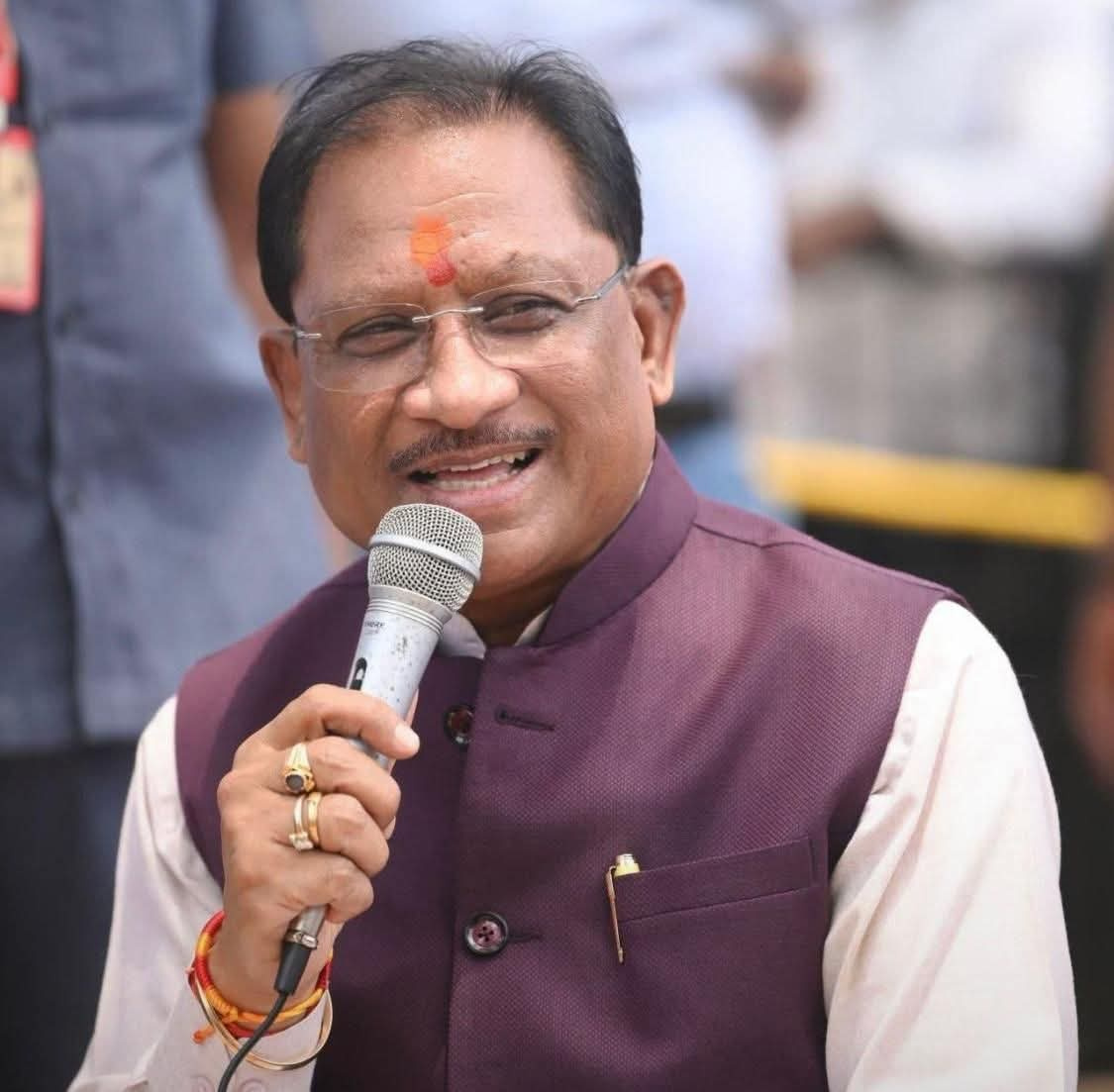
Raipur, July 4, 2026: To make the functioning of the Chhattisgarh BJP government more effective, innovation-driven, and result-oriented, a two-day ‘Chintan Shivir 3.0’ (brainstorming session) of the state cabinet, led by Chief Minister Vishnu Dev Sai, is being organized today, July 4, at the Indian Institute of Management (IIM), Raipur.
Organized by the Good Governance and Convergence Department of the Chhattisgarh Government in collaboration with IIM Raipur, the objective of this camp is to accelerate the vision of a ‘Developed Chhattisgarh’ by enhancing the government’s operational efficiency and fostering innovation and result-oriented approaches.
The Chief Minister stated that in line with the challenges and opportunities of changing times, the government must continuously learn, self-evaluate, and prepare for future requirements. Aligned with this vision, the brainstorming session will serve as a crucial platform for dialogue, experience-sharing, and policy formulation between the cabinet and national experts from various fields.

Comprehensive discussions will be held on topics related to the holistic, balanced, and inclusive development of the state. Detailed sessions will cover subjects such as agriculture, rural development, industry, investment, tourism, sports, innovation, emerging technologies, good governance, institutional reforms, leadership development, and effective public service delivery.
Based on these discussions, future strategies will be formulated regarding government priorities, inter-departmental coordination, and the improved implementation of public welfare schemes.
Sai remarked that good governance is not limited merely to formulating schemes but also entails meeting public expectations by continuously improving oneself in tune with the times. The brainstorming session is a vital medium for this process of continuous improvement.
He stated that the government aims to cultivate a work culture that is transparent, accountable, responsive, and result-oriented, ensuring that the direct benefits reach every citizen of the state.
Sai added that building a ‘Developed Chhattisgarh’ would be possible not just through the optimal use of resources, but through visionary policy-making, innovation, effective leadership, and enhanced coordination among departments. The deliberations at the brainstorming session will provide a new direction for the state’s development journey in the coming years.
National-level experts to share insights
The first day of the Chintan Shivir (brainstorming session) will commence with a lecture on leadership and life values by spiritual guru and motivational speaker Gaur Gopal Das. Following this, Abhay Karandikar will share his views on emerging technologies and their role in future governance. Dr. Ramesh Chand will deliver a special lecture on agriculture, the rural economy, and future agricultural strategies.
The second day will begin with a yoga session. Subsequently, Suman Billa will share insights on the potential of the tourism and service sectors; Shashank Mani Tripathi on public policy and development; Olympic medalist Gagan Narang on excellence, leadership, and a culture of performance; and Dr. Vinay Sahasrabuddhe on good governance, leadership, and citizen-centric administration.
Strengthening the new work culture of good governance
The primary objective of the Chintan Shivir is to foster innovation in governance, strengthen convergence and coordination among departments, enhance the effectiveness of decision-making processes, and encourage a result-oriented administrative culture. Detailed discussions will also be held regarding the optimal use of technology in governance, innovation-driven solutions, and citizen-centric services.